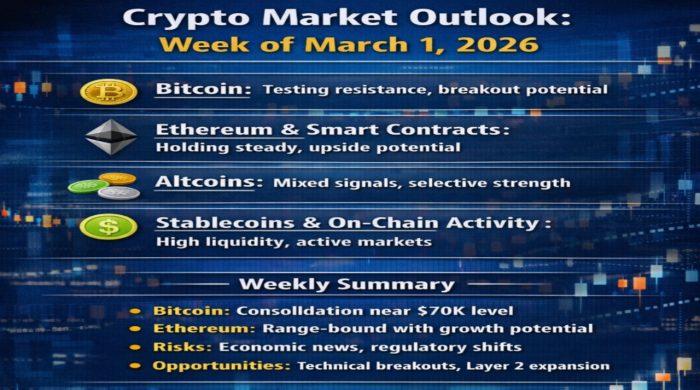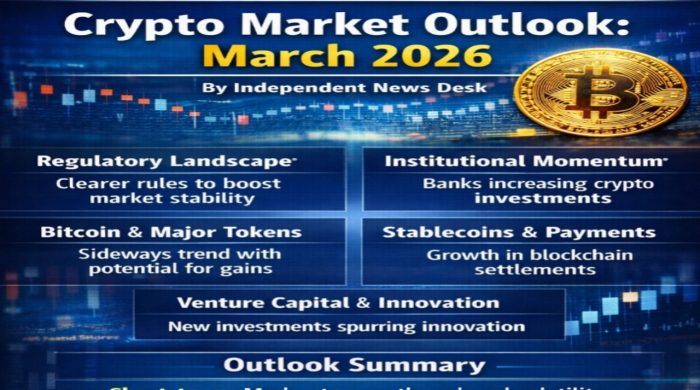



The financial world of 2026 looks vastly different from the chaotic speculative era of 2021. If the previous decade was about the discovery of Bitcoin, this decade is proving to be about its integration. As we cross the first quarter of 2026, Bitcoin isn’t just a ticker symbol on a screen; it has become a structural necessity for the global economy.
In 2024, the Bitcoin mining reward was cut in half, reducing the daily production of new coins. While the immediate price action was debated, 2026 is where the true “Supply Shock” is being felt.
Unlike gold, where a price increase often leads to more mining, Bitcoin’s supply is mathematically capped. We are now seeing a massive “Liquidity Crunch.” Exchanges are reporting record-low Bitcoin balances as long-term “HODLers” and institutional vaults lock away the available supply. When supply stays fixed and demand from global pension funds increases, the result is a parabolic pressure that traditional markets have never witnessed.
The approval of Spot Bitcoin ETFs years ago was the “Trojan Horse” that brought Wall Street into the decentralized world. In 2026, we see the second phase of this: Model Portfolios. Standard financial advisors, who once called Bitcoin a “bubble,” are now mandating a 1\% to 5\% allocation for every diversified portfolio. This “Passive Inflow” creates a constant buying pressure that dampens volatility over time, making Bitcoin behave more like a “High-Velocity Digital Gold” rather than a volatile tech stock.
For years, the criticism against Bitcoin was that it was “slow and expensive.” That argument died in 2025. With the maturity of the Lightning Network and the emergence of Stacks (STX) and other Layer-2 protocols, Bitcoin is now a programmable asset.
Perhaps the most significant development in 2026 is the shift in how countries view Bitcoin. Beyond El Salvador, several smaller nations in South America and Southeast Asia have begun incorporating Bitcoin into their Strategic Reserve Assets. In a world where the US Dollar is increasingly used as a tool for sanctions, neutral, borderless money like Bitcoin offers an “escape valve” for international trade. We are entering an era of “Game Theory” where if one country starts buying Bitcoin, its neighbors feel the pressure to buy as well, lest they be left behind in the new digital gold standard.
The old narrative that “Bitcoin kills the planet” has been largely debunked by data in 2026. Bitcoin mining has become the world’s leading buyer of Stranded Energy. * Methane Mitigation: Companies are now using flared gas from oil fields to power miners, actually reducing carbon emissions.
As we look toward 2030, the volatility of Bitcoin will likely continue to decrease as its market cap rivals that of the global gold market (approximately $14-15 Trillion). While there will always be regulatory hurdles and technological challenges, the “Lindy Effect” is in full force: the longer Bitcoin survives, the more likely it is to become a permanent fixture of human civilization.
Final Thought: We are no longer asking if Bitcoin will reach $100k or $500k. We are asking what a world looks like where the “Unit of Account” is no longer controlled by a printing press, but by mathematics.